Retail displays used to be a weird mix of theater prop and supply-chain compromise. You’d design something bold, then spend weeks watching it get “value engineered” into a sad, flimsy cousin of the original idea.
3D additive-manufactured displays flip that dynamic. Not magically. Not overnight. But decisively.
Because when you can iterate physical fixtures at prototype speed, tune material behavior like an engineer, and instrument the whole thing with real metrics, the display stops being decoration and starts behaving like a product.
One line that matters: time-to-store shrinks, and the guesswork shrinks with it.
Hot take: most retail displays fail because they’re built for procurement, not shoppers
If your fixture was optimized for a single lowest bid and a single install date, it’s going to be rigid, heavy, and outdated the second the campaign shifts. I’ve seen gorgeous concepts die in fabrication because nobody budgeted for iteration, or because the only “iteration” was changing the render.
Additive changes the incentives. You can run smaller batches. You can update one module without rebuilding the whole thing. You can even localize production (if you plan it right) and stop shipping air across the country. That’s why more brands are exploring innovative 3D additive-manufactured displays as a way to make retail environments more adaptable without blowing up timelines or budgets.
That’s not aesthetic innovation. That’s operational leverage.
From concept to store floor: prototyping that doesn’t waste your month
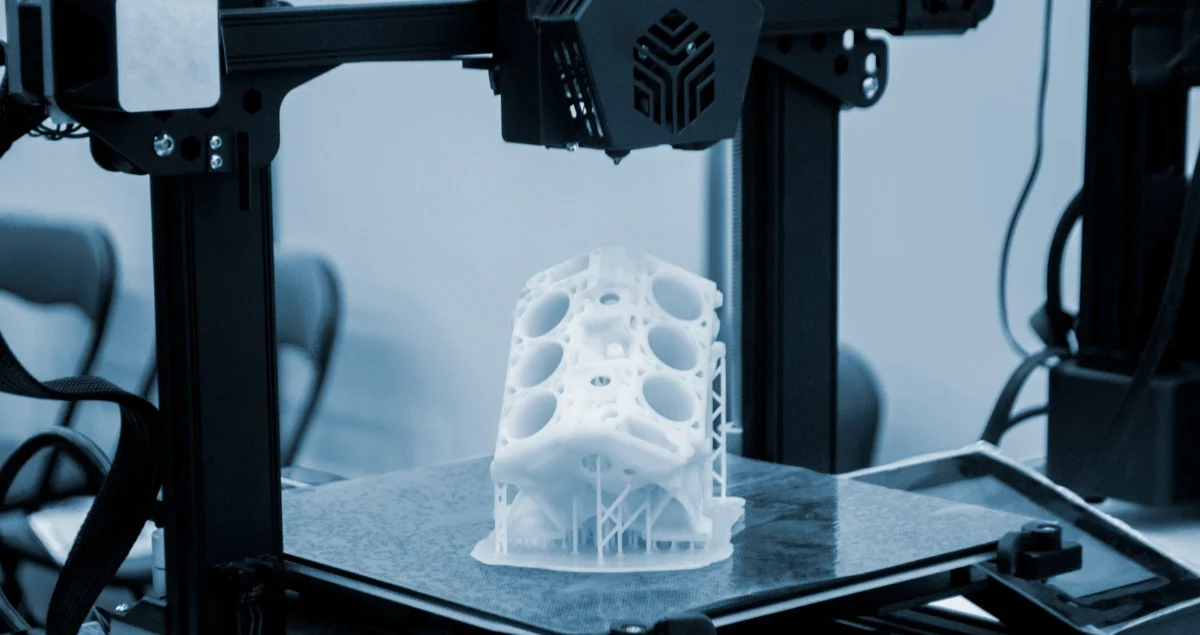
Here’s the thing: fast prototyping isn’t just about speed. It’s about reducing the cost of being wrong.
With printed prototypes, you can test:
– sightlines at actual scale (not guessed from a planogram)
– hand-feel and durability (the stuff customers notice instantly)
– assembly time (install teams will thank you, or they won’t)
– interaction behavior (do people touch it, avoid it, photograph it?)
I like to prototype “ugly early.” Print in cheap material, validate geometry and ergonomics, then upgrade to final substrate/finish once the shape earns it. People who skip that step usually pay for it later in rework, rushed shipping, or, worst, quiet underperformance.
Sometimes you only need 48 hours to learn what a month of meetings can’t.
When the display becomes a measurable system (not just a fixture)
The most serious shift is cultural: teams stop arguing based on taste and start arguing based on data.
A well-designed additive display program tracks things like:
– dwell time near the bay
– SKU-level lift vs. baseline stores
– conversion rate during the campaign window
– interaction depth (touches, presses, repeated engagement)
– reconfig frequency and how long it takes to reset
Now, do you need sensors on every shelf? No. That can get gimmicky fast. But I’ve watched simple A/B tests, two versions of the same printed endcap component, settle debates that would’ve dragged for weeks.
And yes, you can link this to broader analytics: inventory position, promo calendar, even regional behavior differences. That’s where “adaptive environments” stop being hype and start being practical.
Materials & finishes: the part most teams underestimate
If you’re building tactile touchpoints, you’re building trust. Customers may not articulate it, but their hands do.
Material selection has to account for:
– repeated handling and cleaning cycles
– scuffing (especially near carts and strollers)
– UV exposure under retail lighting
– solvent resistance (store ops will use whatever’s nearby)
– joint behavior: snap-fits, living hinges, inserts, magnets
And the finish matters as much as the polymer. Microtexture, gloss level, edge breaks, these aren’t “nice-to-haves.” They control perceived value.
Now, this won’t apply to everyone, but if you’re printing something customers will touch, I usually push teams to test three surface conditions in parallel: raw print, coated, and hybrid (coated only on contact zones). The hybrid often wins because it keeps cost reasonable while protecting the parts that take abuse.
(Also: don’t ignore temperature. A surface that feels cold and plasticky can cheapen even premium products.)
Sightlines, accessibility, flow: the unglamorous stuff that drives sales
A display can be beautiful and still be wrong.
Wrong height. Wrong reach. Wrong angle. Wrong placement relative to the “two-second scan” when someone enters an aisle.
Additive manufacturing helps because you can build geometry that subtly guides attention without adding mass: latticed uprights, tapered headers, integrated product cradles, low-profile wayfinding. You’re shaping movement and choice architecture, not just holding boxes.
And accessibility isn’t negotiable. Printed fixtures make it easier to prototype compliant clearances early rather than “fixing it in install,” which is how you end up with awkward retrofits and inconsistent rollouts.
One-line truth: if shoppers can’t approach it easily, they won’t engage it.
Responsive textures and interactivity (yes, but don’t get cute)
Interactivity works when it reinforces the product story. It fails when it becomes a toy that steals attention from the SKU.
Texture-graded surfaces, rough-to-smooth transitions, embossed maps, pressure-responsive zones, can do something surprisingly powerful: they turn product attributes into physical metaphors. Grip. Cushioning. Durability. Precision. You can communicate that without a wall of copy.
If you add sensors, be disciplined about what you’re measuring. Press counts and dwell time are useful; “gamified engagement” is usually a distraction unless the brand already owns that tone.
Look, I love experimental retail. But I love repeatable performance more.
A real stat, because we should ground this in reality
3D printing isn’t “automatically sustainable,” but it can reduce waste in the right use cases, especially when it replaces subtractive steps or avoids overproduction.
One data point: the U.S. EPA reports that containers and packaging generated ~82.2 million tons of municipal solid waste in 2018, the largest category measured (EPA, Advancing Sustainable Materials Management: 2018 Fact Sheet). Retail displays aren’t the whole story, obviously, but they live in that same disposable ecosystem.
The sustainability play with additive is usually about right-sizing production, designing for reuse, printing modular replacement parts, and choosing materials with realistic end-of-life plans, not just slapping “recyclable” on a spec sheet.
Budget and timeline: how this actually gets shipped
Teams get excited about “rapid prototyping” and then hit the wall: post-processing, finishing, and install labor. Those are the real schedule killers.
A practical way to think about budget allocation is to treat the program like a portfolio:
– Spend more iteration budget on high-velocity categories or hero SKUs
– Standardize structural modules across stores
– Customize only the “story layer” (skins, headers, tactile panels)
– Build a replacement-part pipeline so damage doesn’t kill the experience
I’ve seen multi-site rollouts go smoother when brands commit to a small library of interchangeable components rather than bespoke everything. That’s not boring. That’s scalable creativity.
“Case study” patterns I keep seeing (even when brands don’t call them case studies)
1) Brand narrative displays that behave like systems
Modular geometries let you update chapters of the story without reprinting the entire fixture. Add a new panel, swap a header, change the tactile zone, keep the core.
2) Material storytelling that signals value
Weight, texture, porosity, even visible lattice structures can telegraph “engineered” or “craft” depending on the brand. Done well, customers infer quality before they read anything.
3) Immersive shelving that guides attention
The best immersive shelves aren’t animated circus acts. They’re tuned: lighting, silhouette, and product hierarchy working together, with analytics feeding the next revision.
Measuring success without fooling yourself
If you only measure “people liked it,” you’ll build expensive sculptures.
Better: set baseline stores, run controlled variants, and track lift with humility. The cleanest measurement setups I’ve worked with usually include:
– a pre/post sales baseline window
– matched control stores (similar traffic, similar demographics)
– a single primary KPI (SKU lift or conversion)
– a small number of secondary KPIs (dwell time, interaction rate)
Dashboards help, sure. What helps more is having the discipline to kill underperforming variants and reprint smarter ones.
That’s the quiet superpower of additive in retail: you can treat the physical environment like software, ship, learn, patch, improve, without waiting for the next big remodel cycle.
And once you work that way, going back to static, disposable displays feels… antiquated.